Permanent Outdoor Lighting vs Traditional Holiday Lights: What Homeowners Need to Know
Permanent outdoor lighting vs holiday lights—what’s actually worth it for Utah homeowners? This guide breaks down the real differences in design, cost, durability, and long-term value.
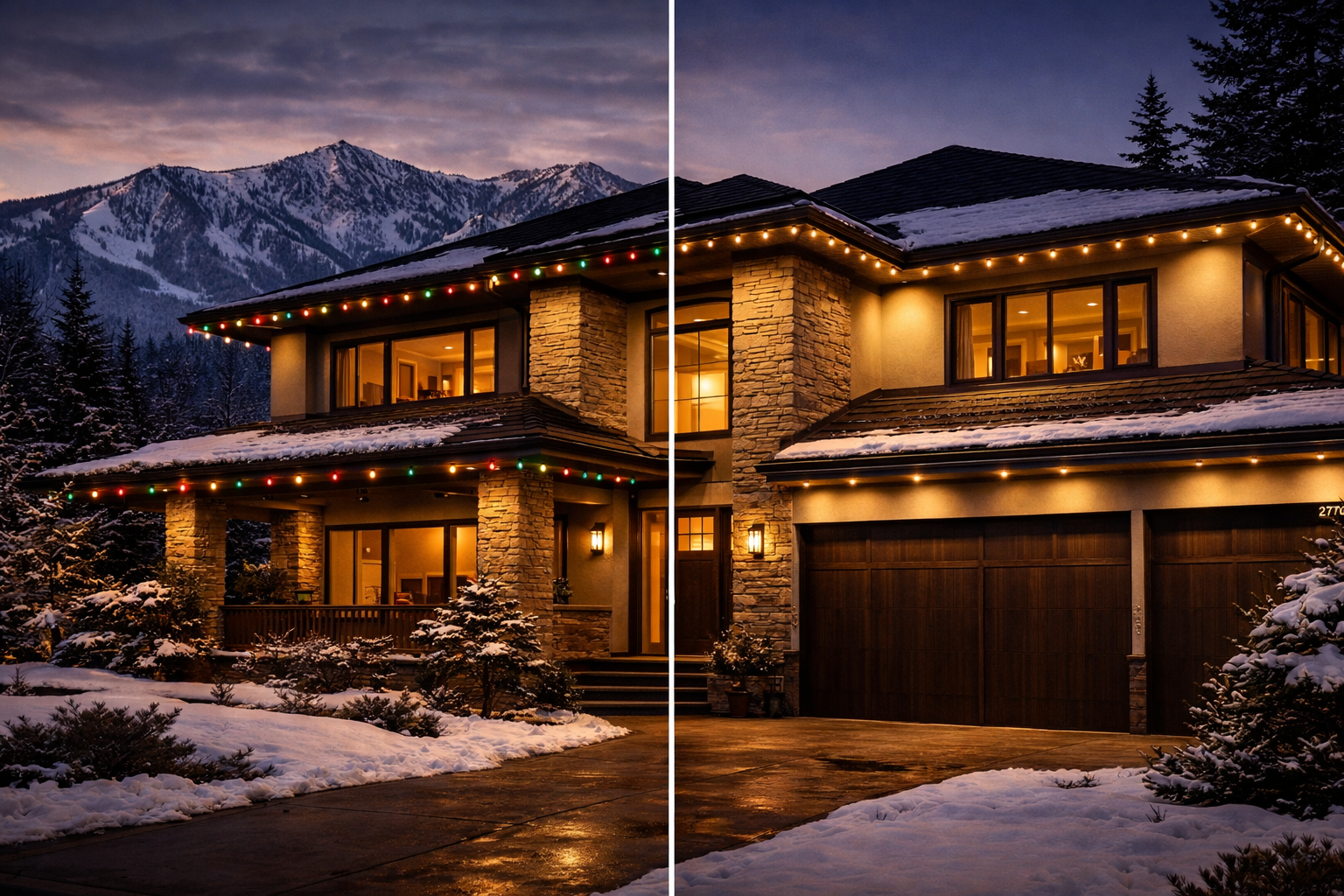
Permanent Outdoor Lighting vs Holiday Lights (Utah Edition)
If you live in Utah, you already know this isn’t just about “putting up lights.”
It’s ladders in the cold.
It’s snow on the roofline.
It’s HOA emails.
It’s doing the same thing… every single year.
At some point, most homeowners start asking a better question:
“Why isn’t this just part of the house?”
That’s where permanent lighting comes in.
The Quick Difference (If You Only Read One Section)
Traditional holiday lights:
Temporary. Installed and removed every year. Visible during the day. Inconsistent look.
Permanent outdoor lighting:
Installed once. Built into the home. Clean during the day. Controlled at night.
Who each is for:
- Holiday lights → short-term, lower upfront cost, DIY mindset
- Permanent lighting → long-term, design-focused, wants it done right once
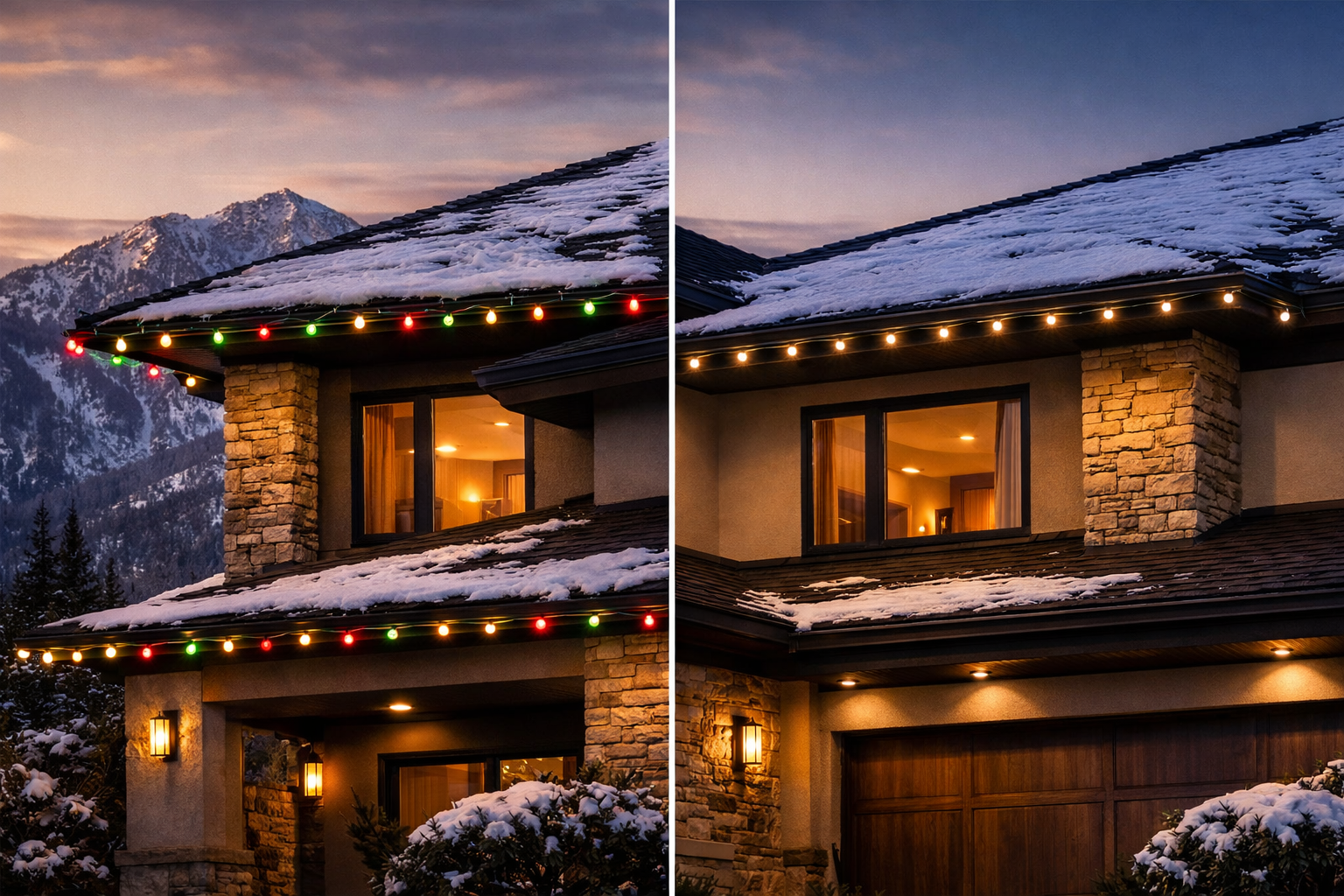
What Holiday Lights Actually Look Like (In Real Life)
Let’s be honest here.
Holiday lights look great…
from the street… at night… in December.
But the rest of the time?
- Clips on the gutters
- Wires showing
- Uneven spacing
- Half the strand out by year two
And in Utah specifically:
- Snow + ice = sketchy installs
- Freeze/thaw = broken clips and wires
- Rooflines are steeper and more complex
You’re not just paying in money.
You’re paying in repeat effort.
What Permanent Outdoor Lighting Actually Is
This is where most people misunderstand it.
This isn’t “leave your Christmas lights up.”
This is:
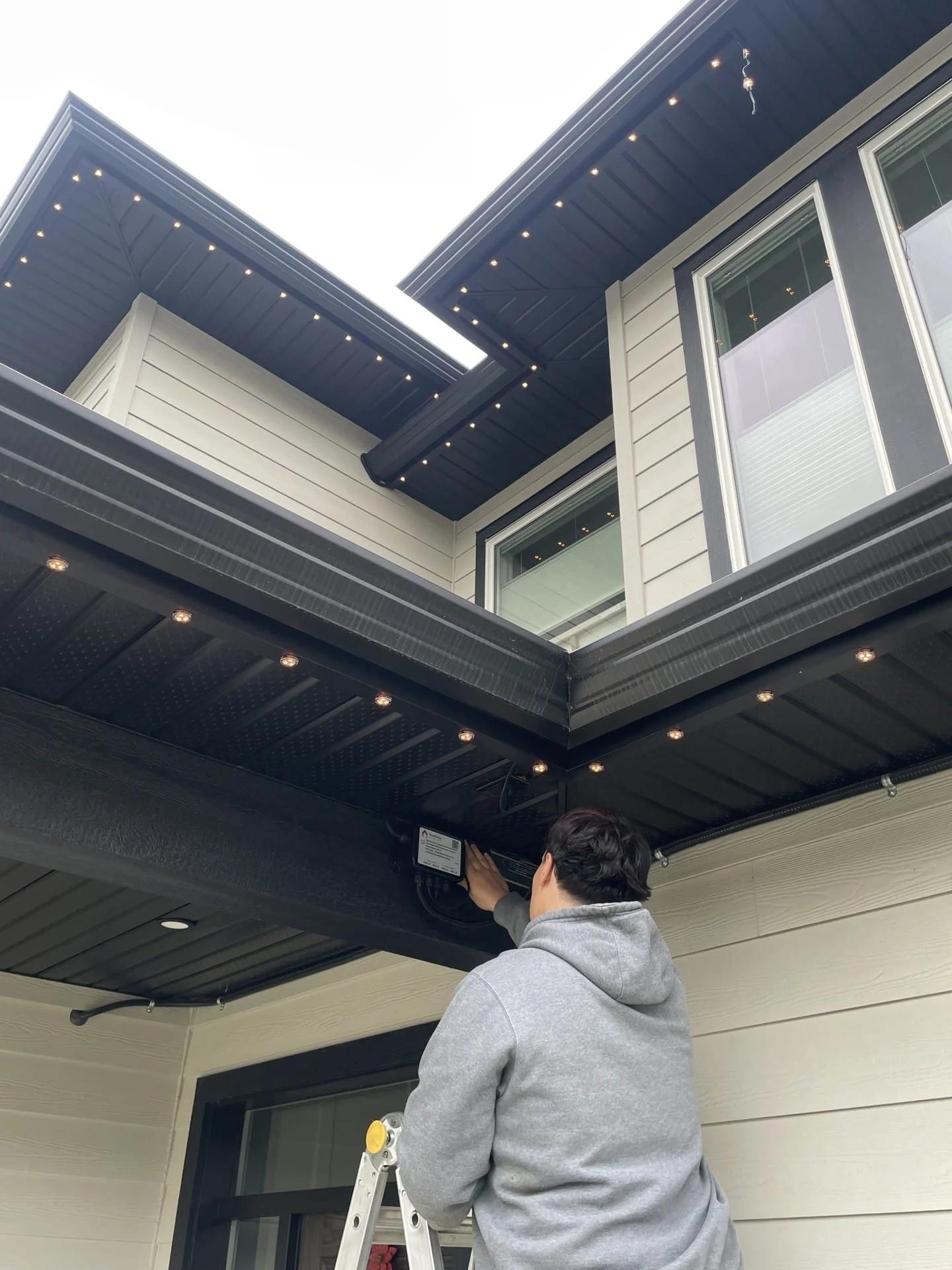
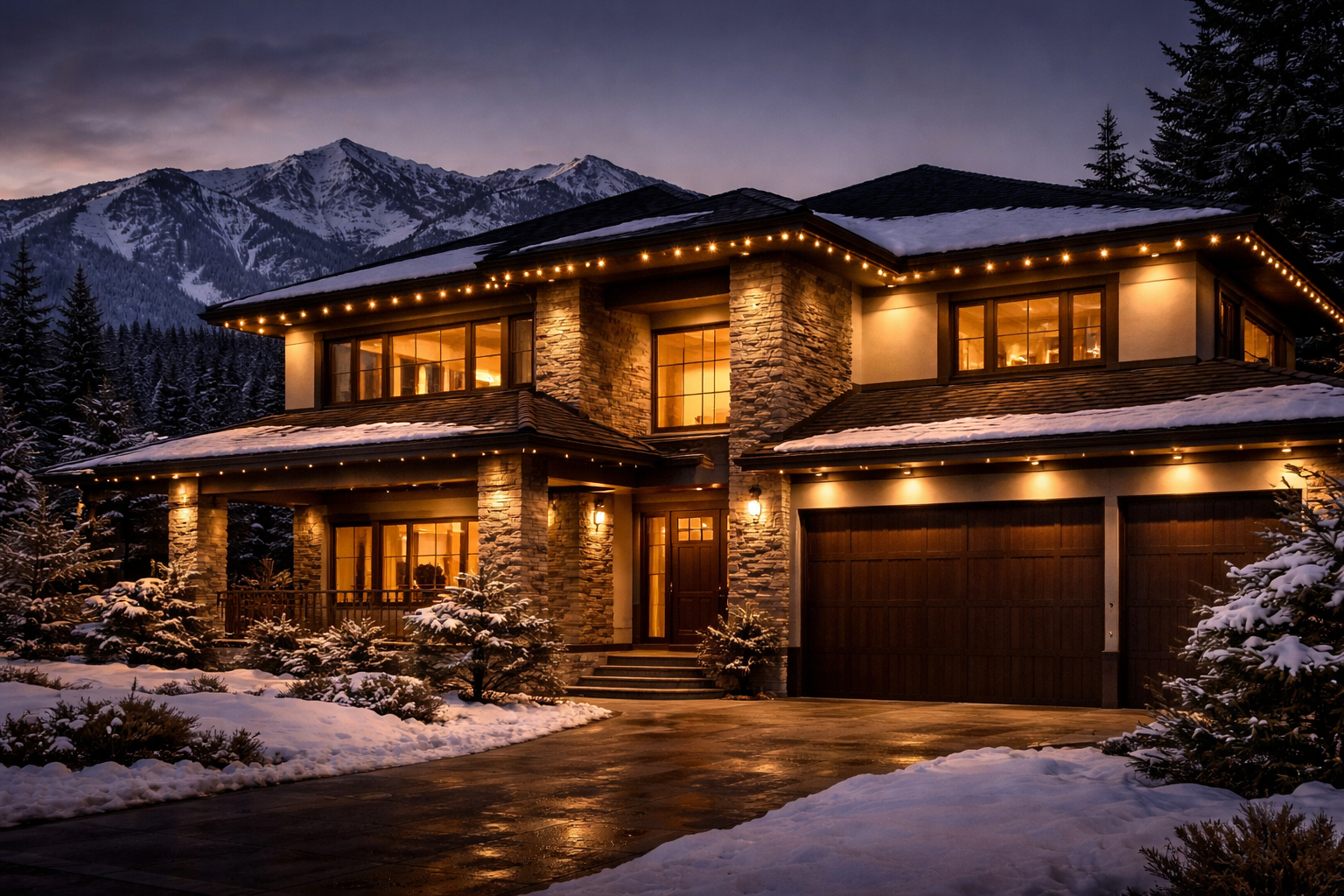
trim lights at the edge of the eaves. LED puck lights that are space 9 inches apart
Installed inside a color-matched track, tucked under the eaves.
Done right, you don’t even notice it during the day.
At night, it reads like the home was designed that way from the beginning.
Why 9-Inch Spacing Matters
Spacing is everything.
Too far apart → spotty, cheap look
Too close → harsh, overlit
9 inches hits the balance:
- Even wash of light
- No hotspots
- Clean architectural lines
It’s one of those small details that separates “nice lights” from premium lighting.
Utah Changes the Equation
This is the part most companies ignore.
Utah isn’t a neutral environment.
1. HOAs Matter More Than You Think
In a lot of neighborhoods:
- You can’t leave seasonal lights up year-round
- Permanent lighting often requires approval
- Brightness and schedules can be regulated
If it looks cheap or overdone, it’s getting flagged.
2. Dark Sky Rules Are Real
Especially in places like Park City and Summit County:
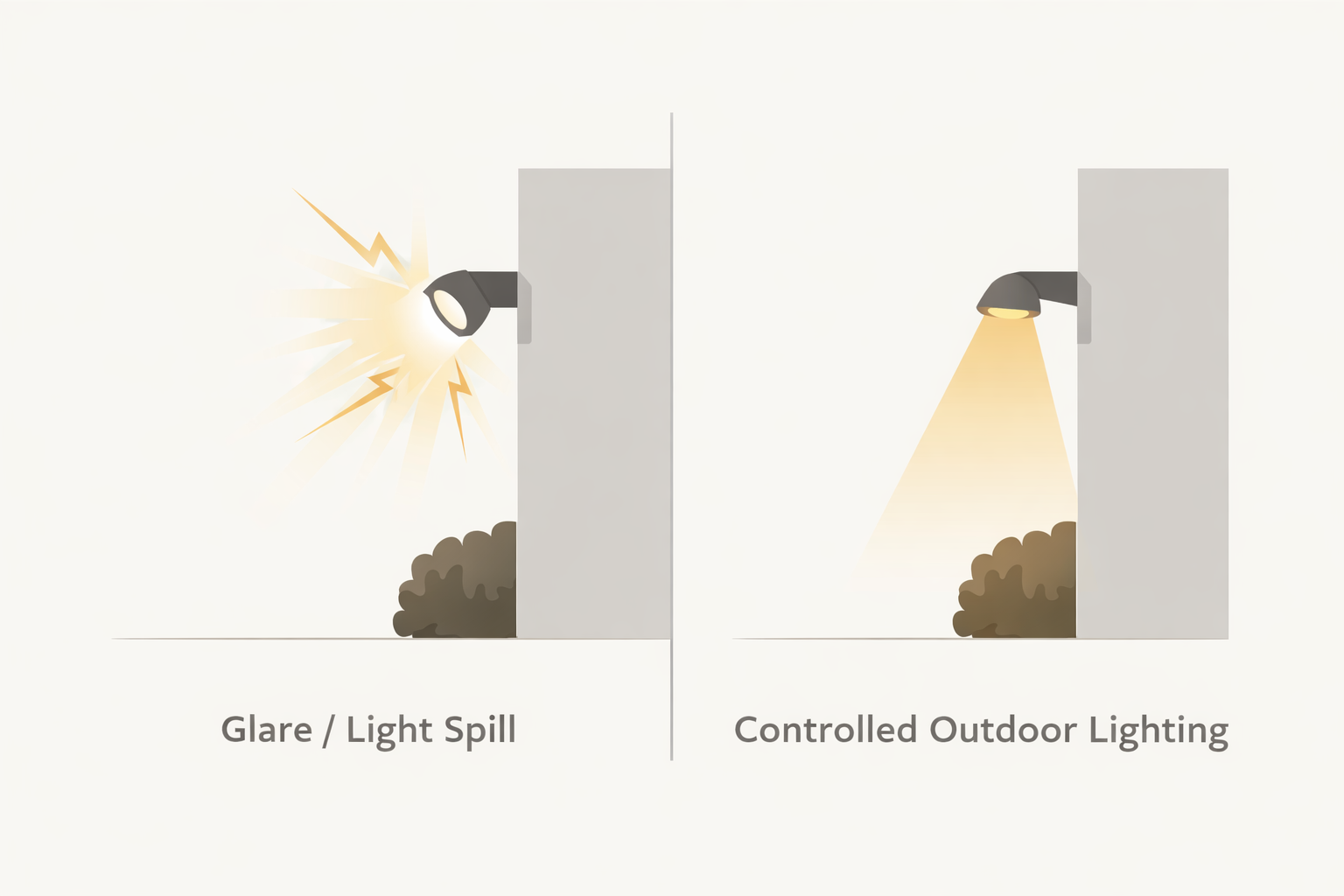
- Lights need to be warm (not blue/white)
- Light needs to be directed downward
- No excessive brightness or glare
This is where permanent lighting actually wins—
because it can be controlled and dialed in properly.
3. Utah Weather Is Brutal on Cheap Systems
- High UV (especially at elevation)
- Snow load + ice
- Freeze/thaw cycles
If it’s not built for that, it will fail.
Side-by-Side Comparison
| Factor | Permanent Lighting | Holiday Lights |
|---|---|---|
| Daytime look | Invisible / built-in | Visible wires + clips |
| Night look | Smooth, architectural | Dotted, inconsistent |
| Install | One-time | Every year |
| Maintenance | Low | Constant |
| Cost over time | Lower long-term | Adds up yearly |
| Control | App + scheduling | Manual |
| HOA friendliness | High (if designed well) | Limited |
| Durability | Built for outdoors | Not really |
A Smarter Way to Think About It
This isn’t really about “lights.”
It’s about:
- Do you want this to look permanent or temporary?
- Do you want to deal with it every year or not?
- Do you care how your home looks during the day?
Because that’s the real difference.
Where Permanent Lighting Makes the Most Sense
High-End Neighborhoods
If the homes around you are clean and well-designed…
temporary lighting starts to stand out (in a bad way).
Mountain + Foothill Homes
These benefit the most:
- Longer rooflines
- More exposure
- Higher UV
Anyone Planning to Stay 3–5+ Years
This is where the math flips.
What the Process Actually Looks Like
FAQ
Is permanent lighting allowed in Utah HOAs?
Usually yes—but approval is often required. Design matters.
Will it violate dark sky rules?
Not if done correctly:
- Warm color temp
- Downward lighting
- Controlled brightness
Does it use a lot of electricity?
No—modern systems are efficient and controllable.
Does it increase home value?
Not directly like square footage—but it absolutely improves:
- Curb appeal
- Perceived quality
- Buyer interest
Final Thought
Most people don’t upgrade because of lighting.
They upgrade because they’re tired of:
- Doing it every year
- Looking at wires and clips
- Settling for “good enough”
And once it’s installed correctly…
You don’t think about it anymore.
It just works.
Continue Planning Your Project
If this article helped, the next step is comparing service options, installation timelines, and warranty coverage so you can choose the right system for your home.